SEPUP has revised all three middle school science curricula: Issues and Earth Science, Issues and Life Science, and Issues and Physical Science. The second edition of these courses have been revised to include updated data and information regarding recent events. Specific changes for each course include:
Issues and Earth Science
- Updated data from NASA’s Kepler Mission
- Activity 32, “Modeling Erosion,” has been revised as an Engineering Design activity, consistent with the recommendations of the Next Generation Science Framework
- Additional information on recent events, such as the 2011 earthquake in Japan, the Fukushima nuclear accident, Yucca Mountain, and global climate change
Issues and Life Science
- Updated data throughout the course
- Additional set of geologic event cards to help students understand mass extinctions and the role of geologic events in determining the changes used to define geologic time periods
- Additional sections on How cells Work Together (Activity 42) and Defining Life (Activity 45)
Issues and Physical Science
- An entire new unit consisting of eleven activities, titled Waves
- Added engineering aspects to three activities, consistent with the recommendations of the Next Generation Science Framework
- Two new laboratory activities in Unit D (Energy) on electric motors and generators, magnetic fields, and electromagnetism

Donna Markey, a science teacher at Vista Magnet Middle School in Vista, California, is one of two middle level recipients of the 2012 PASCO STEM Educator Award, sponsored by PASCO scientific that honors K–12 STEM educators who implement innovative, inquiry-based, technology-infused STEM programs. Donna has been a long time user, contributor, and developer of many SEPUP curricula. Everyone at SEPUP and LAB-AIDS would like to congratulate Donna on this magnificent achievement.
To read the full article announcing this award and many others, please click here.
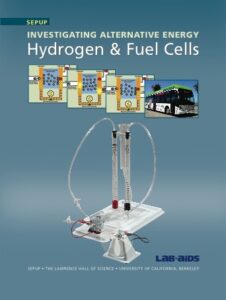
The Hydrogen Technology and Energy Curriculum (HyTEC) project has developed and field-tested a high school chemistry module titled, Investigating Alternative Energy: Hydrogen & Fuel Cells. This module is currently available and was developed by SEPUP in collaboration with the Schatz Energy Research Center (SERC) at Humboldt State University, and is published by LAB-AIDS, Inc. The new curriculum is based on SEPUP's issue-oriented and inquiry-based approaches to science teaching and learning. In a sequence of six high school classroom activities, students are introduced to hydrogen and fuel cells in the context of energy for transportation. This sequence of activities addresses National Science Education Standards and state science standards related to topics such as energy transformations, energy efficiency, chemical reactions, oxidation-reduction, stoichiometry, and societal perspectives on energy issues. We would like to thank the U.S. Department of Energy and the Alameda-Contra Costa Transit District for their support of this project. Click here for more info.
What’s new in SEPUP’s latest high school course? Science and Global Issues: Biology includes all of the support for students and teachers found in the SEPUP middle school programs, plus some new features appropriate for high school science. Key features of the program are outlined below.
In the Student Book:
In the Teacher’s Edition:
In the Teacher Resources:
Additional Resources:
Furthermore, the revision of the physical science units is in full swing. These units examine sustainability issues from a physical science perspective. The four units look in depth at resource and energy use and at how waves affect structures and people. The full two-year Science & Global Issues course will be available in 2012. Click here for more info.
In honor of their tenth anniversary, the SEPUP group in Japan invited us to visit and work with a group of their teachers and students. Barbara Nagle and Maia Willcox were delighted to travel across the Pacific and participate in the lively exchange of ideas organized by our colleagues in Japan. Barbara presented a talk to the teachers on SEPUP’s history, approach, and recent projects. Maia worked with the teachers using some of SEPUP’s new strategies, including the “walking debate,” in which participants move around the room based on their evidence-based position on an issue. The next day Maia taught a group of middle school students two activities from a SEPUP module while the teachers observed. At the end of the lesson Maia and the teachers helped the students participate in a walking debate. Several of the SEPUP Japan teachers demonstrated lessons with both students and teachers. The event concluded with a discussion of the value of and approaches to issue-oriented science in Japan and the United States.
At the closing ceremony, the SEPUP Japan teachers spoke about how SEPUP has helped them to become better teachers by increasing their understanding and use of hands-on, inquiry-based, issue-oriented science. We are grateful to our hosts in Japan for the exchange of ideas and strategies and the great science teaching we observed during our visit.
Arigato, SEPUP Japan!
BAEER Fair
January 21, 2012
San Francisco Bay Area, CA
“Using Environmental Issues to Teach Ecology”
Presentation Slides
Activity #7 - Student Book
Activity #7 - Teacher's Edition
Activity #7 - Student Sheet
Activity #16 - Student Book
Activity #16 - Teacher's Edition
Activity #16 - Student Sheets
Activity #16 - TransparenciesGeorgia Science Teachers Association
February 16-18, 2012
Atlanta, GA
“Genetics: A Novel Method for Teaching Gene Expression”
Presentation Slides“Photosynthesis and Respiration Shuffle! Teaching for True Conceptual Understanding”
Presentation Slides
Student Book Pages
Teacher's Guide Pages
Student Sheet“Investigating Alternative Energy: Hydrogen and Fuel Cells”
Presentation Slides
Activity #1 - Student Book
Activity #1 - Teacher's Edition
Activity #4 - Student Book
Activity #4 - Teacher's EditionWisconcin Society of Science Teachers (WSST) Conference
March 8-10, 2012
Madison, WI
“Teaching Macroevolution and Phylogenetics through Biodiversity and Conservation Management”
Presentation Slides
Activity #7 - Student Book
Activity #7 - Teacher's Edition
Activity #15 - Student Book
Activity #15 - Teacher's Edition“Ecology: Using Flexible Models to Teach Population Dynamics”
Presentation Slides
Activity #7 - Student Book
Activity #7 - Teacher's Edition
Activity #7 - Student Sheet
Activity #16 - Student Book
Activity #16 - Teacher's Edition
Activity #16 - Student Sheets
Activity #16 - Transparencies“Genetics: Gene Regulation and Genetic Engineering”
Presentation Slides
Activity #17 - Student Book
Activity #17 - Teacher's Edition
Student Sheet 17.1
Student Sheet 2.3
Cellular Event Cards“Teaching Chemistry with Hydrogen and Fuel Cells”
Presentation Slides
Activity #1 - Student Book
Activity #1 - Teacher's Edition
Activity #4 - Student Book
Activity #4 - Teacher's EditionMichigan Science Teachers Association Annual Conference
March 9-10, 2012
Lansing, MI
“I think There's a Genetically Modified Fly in my Genetically Modified Pea Soup”
Presentation Slides“O2 Understand Photosynthesis and Cellular Respiration”
Presentation Slides
Student Book Pages
Teacher's Guide Pages
Student Sheet“Fuel for the Next Generation?”
Presentation Slides
Activity #1 - Student Book
Activity #1 - Teacher's Edition
Activity #4 - Student Book
Activity #4 - Teacher's EditionNSTA National Conference
March 29 - April 1, 2012
Indianapolis, IN
Thursday, March 29
“Come Get a Charge Out of This!”
Presentation Slides“I Think There's a Genetically Engineered Fly in My Genetically Modified Pea Soup!”
Presentation Slides
Activity #17 - Student Book
Activity #17 - Teacher's Edition
Student Sheet 17.1
Student Sheet 2.3
Cellular Event Cards“Differentiating Instruction in Middle School Physical Science”
Presentation Slides
Chemical Batteries Activity, Intermediate
Chemical Batteries Activity, Independent“Developing 21st-Century Skills Through Issue-oriented Science”
Presentation Slides“Phylogenetics—Barking Up a Better Tree?”
Presentation Slides
Activity #7 - Student Book
Activity #7 - Teacher's Edition
Activity #15 - Student Book
Activity #15 - Teacher's EditionFriday, March 30
“Connecting Gene Expression and Sustainability”
Presentation Slides
Activity #17 - Student Book
Activity #17 - Teacher's Edition
Student Sheet 17.1
Student Sheet 2.3
Cellular Event Cards“Fuel for the Next Generation?”
Presentation Slides
Activity #1 - Student Book
Activity #1 - Teacher's Edition
Activity #4 - Student Book
Activity #4 - Teacher's Edition“I Think There's a Genetically Engineered Fly in My Genetically Modified Pea Soup!”
Presentation Slides
Activity #17 - Student Book
Activity #17 - Teacher's Edition
Student Sheet 17.1
Student Sheet 2.3
Cellular Event Cards“O2 Understand Photosynthesis and Cellular Respiration!”
Presentation Slides
Student Book Pages
Teacher's Guide Pages
Student SheetSaturday, April 1
“Teaching Sustainability Issues Through an Evolutionary Lens”
Presentation Slides
Activity #7 - Student Book
Activity #7 - Teacher's Edition
Activity #15 - Student Book
Activity #15 - Teacher's EditionNational Association of Biology Teachers (NABT) Conference
October 31 - November 3, 2012
Dallas, TX
“Integrating Biodiversity Issues into an Evolution Classroom”
Presentation Slides
Activity #7 - Student Book
Activity #7 - Teacher's Edition
Activity #15 - Student Book
Activity #15 - Teacher's Edition“Using Current Issues to Teach Ecosystem and Population Dynamics”
Presentation Slides
Activity #7 - Student Book
Activity #7 - Teacher's Edition
Activity #7 - Student Sheet
Activity #16 - Student Book
Activity #16 - Teacher's Edition
Activity #16 - Student Sheets
Activity #16 - TransparenciesNSTA National Conference
April 10 - April 13, 2013
San Antonio, TX
“Gene Expression and Cellular Differentiation”
Presentation Slides
Activity #17 - Student Book
Activity #17 - Teacher's Edition
Student Sheet 17.1
Student Sheet 2.3
Cellular Event Cards“Stem Cell Differentiation”
Presentation Slides
Activity #14 - Student Book
Activity #14 - Teacher's Edition
Activity #15 - Student Book
Activity #15 - Teacher's Edition“Biomes and Invasive Species”
Presentation Slides
Activities #3 and 4 - Student Book
Activities #3 and 4 - Teacher's Edition
Student Sheets
Discussion Web Student Sheet
Spring 2006: Focus on Literacy
Strategies for supporting literacy are highlighted in this issue, with particular emphasis on their role in formative assessment. Several examples are provided including a writing frame, an anticipation guide, and concept mapping. There is an article about the use of literacy strategies to address the needs of diverse learners. In addition, details about SEPUP's new middle school course, Issues and Earth Science, are presented along with a description of SEPUP's development of materials on hydrogen fuel cells for the Department of Energy, in conjunction with the Schatz Energy Research Center at Humboldt State University.
Click here to download a pdf version of the Spring 2006 SEPUP News.
Spring 2005: Focus on Issue-Oriented Science
This issue provides both conceptual background and practical information about issue-oriented science—the core of SEPUP's approach to science education. In addition to a useful overview of the issue-oriented curriculum, there is an article about the role of evidence and trade-offs, the role of issues in the SEPUP instructional model which is exemplified by a sample activity, teaching tips for the issue-oriented classroom, pointers for developing media literacy among SEPUP students, and more.
Click here to download a pdf version of the Spring 2005 SEPUP News.
Fall 2004: Focus on the Classroom Learning Environment
The broad range of articles in this issue provides teachers with guidance, resources, and suggestions for using SEPUP with their students. Featured in this issue are an overview of types of learning environments, a sample activity highlighting SEPUP's 4-2-1 approach to cooperative learning, suggestions for materials management, and an examination of questioning in the classroom.
Click here to download a pdf version of the Fall 2004 SEPUP News.
Spring 2004: Focus on Inquiry
This issue, just in time for NSTA, addresses a variety of aspects of inquiry in the science classroom including a description of the SEPUP approach to inquiry, how to use current events to promote inquiry, a sample SEPUP activity, and implementation of inquiry and the National Science Education Standards.
Click here to download a pdf version of the Spring 2004 SEPUP News.
Fall 2003: Focus on Assessment
In Fall 2003, we decided to devote each issue of the SEPUP News to a specific topic related to SEPUP instructional materials and SEPUP's approach to science education in order to build a reference library for SEPUP teachers.
This first “focused” issue provides a range of articles about the SEPUP Assessment System including classroom examples, a selected bibliography, teacher experiences, background information and useful diagrams.Click here to download a pdf version of the Fall 2003 SEPUP News.